Canada has a role in global illegal wildlife trade, says Cariboo based researcher
Published 6:58 am Saturday, March 7, 2026
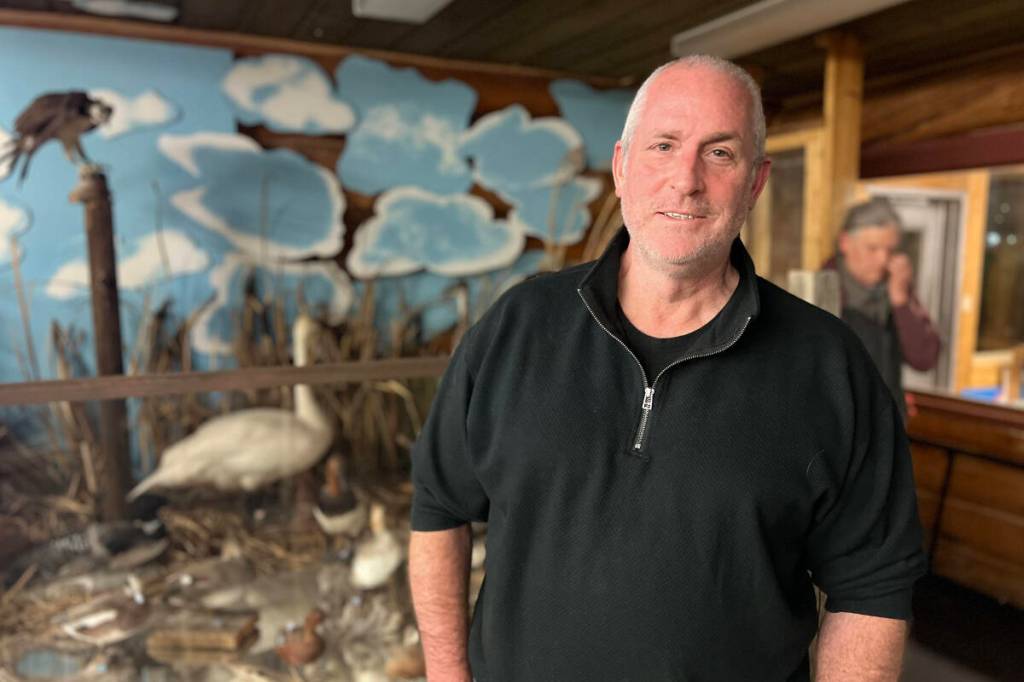
Dr. Chris Shepherd is happy to live in a quiet corner of the Cariboo, and away from his previous work as an undercover in-person researcher on foreign wildlife markets.
But the biologist’s fight against the global illegal wildlife trade hasn’t stopped.
Shepherd spent years conducting undercover market surveys in Asia to support efforts aimed at tackling the multi-billion-dollar wildlife trade. The trade is pushing some species toward extinction, threatening biodiversity, posing risks to public health and causing major animal welfare issues. In some cases, as many as 50 per cent of animals in the wildlife trade die within the first 24 hours of capture, with many more dying during transport.
He shared glimpses of this world during a talk on Thursday, Mar. 5, at the Scout Island Nature Centre, hosted by the Williams Lake Field Naturalists Society. The evening event drew a small crowd of animal lovers interested in hearing about Shepherd’s decades-long effort to combat the illegal capture, killing and trade of wildlife around the world.
Shepherd described his past work identifying, documenting and counting animals in Asian wildlife markets. In some markets, bats roost above caged songbirds while parts of dead monkeys sit nearby — conditions that clearly illustrate the risks of cross-species disease transmission.
The COVID-19 pandemic, he said, did not surprise him.
He wondered how a global disease outbreak had not happened sooner, given the scale and conditions of some wildlife markets. Thousands of animals are kept in stacked cages, and animals are butchered on the same concrete floors for years in facilities without refrigeration.
During his undercover work, Shepherd helped identify key trade networks, routes and smuggling methods involved in a global network trafficking wildlife — both live animals and animal parts — for exotic pets, wild meat, traditional medicines, trophies and decorations.
Tracing these networks, which are often connected to organized crime, can allow law enforcement agencies to disrupt the trade and shut down operations that are devastating wildlife populations.
However, corruption within enforcement systems and the immense profits involved mean that shutting down one operation rarely stops the trade for long.
Shepherd later focused more on research, hoping that strong data could convince governments to take coordinated action. He founded an organization called Monitor Conservation Research to study and document the impact of wildlife trade on species around the world.
When he moved to Canada — settling in a small rural community outside Williams Lake — Shepherd assumed he would be far removed from the wildlife trade. He believed a country known for its appreciation of nature would be largely disconnected from the troubling realities he had witnessed in Southeast Asia and elsewhere.
Instead, he now believes Canada may be ignoring a significant problem.
According to Shepherd, Canada plays a larger role in the global wildlife trade than many people realize, including the trade in illegal animals and animal parts, due to a lack of resources allocated to enforcement.
“Most people have no idea how big it is,” he said.
As an example, Shepherd pointed to products such as snakeskin boots sold in Canada. Because legal and illegal wildlife products are often mixed in global markets — sometimes aided by corruption — consumers have no reliable way of knowing whether the material comes from a legal or ethical source.
When Shepherd began researching wildlife trade in Canada, he found that publicly available data was extremely limited.
Border and customs agents, he said, are often unable to identify species accurately. As a result, wildlife traders may simply label imported animals as “songbirds,” making it difficult to determine whether endangered or protected species are being brought into the country.
In other cases, importers might label shipments as “venomous snakes,” discouraging inspection. The boxes could contain anything, Shepherd said — live turtles are legal to trade in Canada, which is one of the loopholes which allows importers to sell them once they being them in illegally.
When Shepherd and his colleagues attempted to analyze wildlife import records, they found that 84 per cent of the government data lacked taxonomic information identifying the species involved. Some shipments listed thousands of animals but were simply recorded as “unknown.”
These limitations in the oversight mean that species whose importation is illegal can still be found for sale online in Canada, including endangered monitor lizards.
In one example, he shared, boxes of dried bats of a rare species naturally found curled inside banana leaves, were imported into Canada for use as Halloween decorations. Testing on the preserved animals indicates the presence of several potential diseases that could pose risks to both wildlife and humans.
Despite the scale of the problem, Shepherd remains committed to raising awareness and pushing for change.
After the new American administration cut funding to U.S. Agency for International Development (USAID)— which had previously supported his non-profit organization Monitor — Shepherd continued his work gathering data and sharing his expertise. He now works with the Centre for Biological Diversity.
“A lot of people think they can’t do anything about this — they can,” he said.
Shepherd encouraged teachers and community members to invite him to speak in classrooms. He also mentioned a children’s book written by his wife that explores the illegal turtle trade and helps introduce the issue to young readers.
Universities, he said, should also encourage graduate students to pursue research on wildlife trade and population monitoring. He suggested potential PhD topics ranging from wolverine population numbers to harvest rates for animals trapped for fur.
“The number one problem in Canada is nobody has any idea this is happening,” he said.
Addressing the issue, Shepherd believes, will require both stronger legislation and prioritizing enforcement as well as broader public education.
He would like to see hunting education programs include information about illegal wildlife trade and its impacts. His research suggests that much of the global illegal trade in bear parts originates in Canada.
At the same time, he said populations of fur-bearing animals such as wolverines and fishers are not being adequately monitored, and the trade in their fur is not sufficiently tracked. As a result, it is unclear whether current harvesting levels are sustainable or how much illegal trade may be occurring.
Animals whose populations are declining should be subject to stronger regulation, he said.
According to Shepherd, much of Canada’s fur exports are sold to Russia and China.